Patients are searching differently, platforms keep changing and budgets are under pressure. You wouldn’t treat a complex condition with a single modality, so don’t market your practice with a single channel. Here’s a checklist of priorities for 2027, one stage at a time.
If you run a healthcare practice, you’ve probably felt it this year: the marketing that used to work feels less reliable, the advice is more conflicting than ever, and there’s constant pressure to “do more” online. This checklist cuts through that. We’ll look at the real problem, why it matters more in 2027 than it did a year ago, and a practical framework for fixing it.
- Patients find practitioners through AI overviews, Google Maps, search results, Google Ads and social media, then almost all check the practice website before booking.
- No single channel wins a patient alone. Each one needs to work with the others.
- Generative Engine Optimisation (GEO) helps AI tools recommend your practice. It builds on SEO rather than replacing it.
- The PACER model organises marketing into five stages: Positioning, Attraction, Conversion, Engagement and Reactivation.
- Start with your weakest stage. Fixing conversion first makes every attraction dollar work harder.
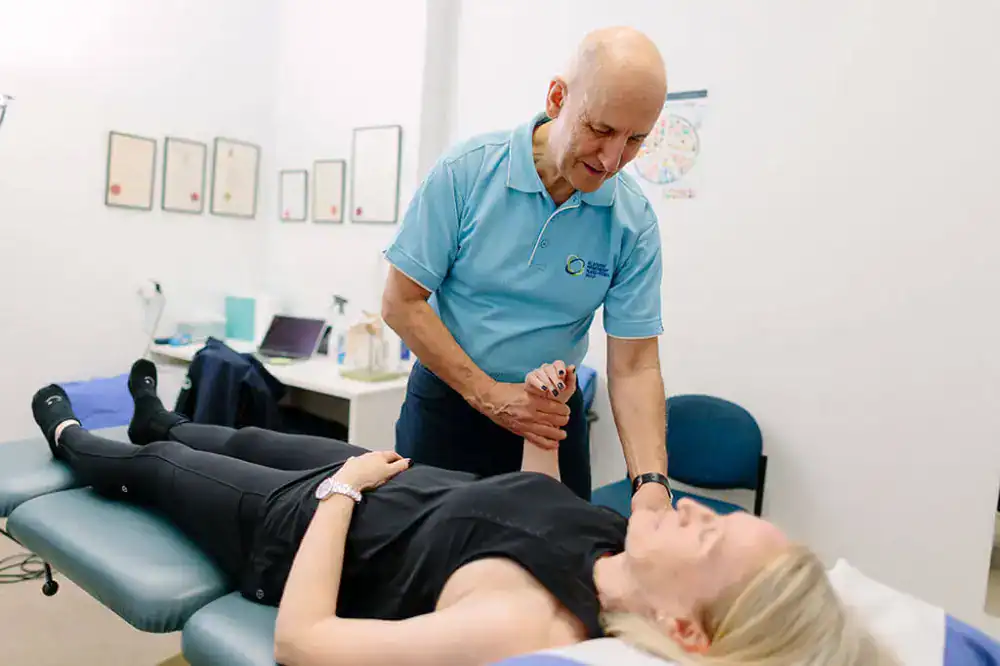
When a patient presents with a complex condition, you don’t rely on one discipline. A GP, physio, dietitian and psychologist might each play a part, and outcomes improve when they work together.
Your marketing works the same way. Your website, SEO, GEO, Google Ads, social media, email and reactivation campaigns each have a job. On their own, each does a little. Coordinated, they do far more.
Why isn’t one marketing channel enough for a healthcare practice?
One marketing channel isn’t enough for a healthcare practice because patients use several routes to choose a practitioner: AI answers, Google Maps, search results, ads and social media, then the practice website. If any of those touchpoints is weak, patients choose a competitor instead.
Most practices don’t have a marketing problem so much as a structure problem. Activity happens in isolated pieces: a website built a few years ago, a Google Ads account someone set up once, an occasional social post, a newsletter when there’s time.
Each piece might be fine on its own. But patients don’t experience your practice in pieces. They search, compare, book, attend, and (hopefully) come back. When your marketing isn’t built around that journey, there are gaps, and patients slip through them.
Healthcare isn’t a commodity
Choosing a health professional is a deeply personal decision. People want to know who they’ll be consulting with before they book, and they find out in different ways.
Some patients start with an AI overview. Some go straight to Google Maps and read the reviews. Others work through the search results and compare practices. Many click a Google Ad, or first discover a practice through Facebook or Instagram. Then almost all of them do the same thing: they visit the practice website to look at the practitioner and the services offered.
That’s why one channel is never enough. Just as no single discipline treats a complex condition alone, no single channel wins a patient alone. Being cited by AI won’t help if your reviews are thin. Ranking on page one, or paying for ads and social campaigns, won’t help if your website doesn’t introduce your team. Every touchpoint has to work together.
- You’re not sure which channels are actually bringing in new patients.
- Your website gets visitors, but enquiries haven’t grown with them.
- Patients finish a course of care and you don’t hear from them again.
- You’ve been told you “need to be on AI” but no one has explained what that means.
Why is healthcare marketing getting harder in 2027?

Healthcare marketing is getting harder in 2027 for three reasons: patients now also ask AI tools for practitioner recommendations, Google Ads clicks cost more each year, and most practices neglect the existing patients who already trust them.
A fragmented approach has always cost practices patients. Heading into 2027, three shifts make those gaps more expensive.
1. Search behaviour has fundamentally changed
Plenty of patients still type “podiatrist near me” into Google, check Maps and read reviews. But a growing number now also ask ChatGPT, Gemini, Perplexity or Google’s AI Overviews a full question: “Who’s a good podiatrist in Ballarat for heel pain that bulk bills?”. They get back a short list of recommendations.
That adds a new place your practice needs to show up. In traditional search, you could rank fifth and still be considered. In an AI answer, if your practice isn’t cited, that patient may never see you there. This is where Generative Engine Optimisation (GEO) comes in: making sure AI platforms can understand, trust and recommend your practice.
AI search doesn’t replace Google. It’s one more place patients look.
2. Every patient costs more to acquire
Competition for clicks keeps rising, and paid channels reward practices that convert well. If your website leaks enquiries or your booking process has friction, you’re paying for attention you never turn into appointments.
3. Your existing patients are being ignored
Most marketing budgets go almost entirely to finding new patients, while the people who already know and trust you drift away. Without ongoing communication and reactivation, you lose continuity of care and a large share of each patient’s lifetime value.
And all of this needs to stay AHPRA compliant. Chasing quick wins with the wrong messaging is a risk no practice should take.
How should a practice plan its marketing for 2027?
A healthcare practice should plan its 2027 marketing as one coordinated, multi-channel plan built around the patient journey, where every channel has a clear job and hands off to the next. practiceedge structures this with its five-stage PACER patient lifecycle model.
More tactics won’t fix it. Like a good multi-disciplinary team, you need a structure that connects them, so every channel has a job, every stage hands off to the next, and you can see what’s working.

At practiceedge, we use a framework built on patient lifecycle marketing. We call it PACER.
Five stages. One connected patient journey.
| Stage | Goal | Key channels |
|---|---|---|
| Positioning | A clear, credible digital presence | Brand, website, content |
| Attraction | Be found wherever patients look | SEO, GEO, Google Ads, social |
| Conversion | Turn interest into appointments | Offers, reviews, online booking |
| Engagement | Stay connected through care | Newsletters, SMS, email, chatbots |
| Reactivation | Welcome past patients back | Recalls, targeted campaigns |
Use each stage below as a checklist of priorities for 2027.
Positioning: build a strong digital presence
Positioning, the first stage of practiceedge’s PACER model, is how a healthcare practice presents itself online: brand, site structure, functionality and content. In 2027 it should tell patients, Google and AI tools exactly who the practice helps, how and why to choose it.
Everything else depends on this. Before you spend on visibility, make sure what patients find is clear, credible and genuinely yours: who you help, how you help, and why they should choose you.
Positioning is also your brand. Before a patient reads a word, they’ve already judged your practice on how it looks. Your logo, colours, typography and photography should feel consistent and professional everywhere, from your website to your Google profile and social channels.
Then there’s how your site is built. A clear site structure helps patients (and Google and AI tools) find each service, condition and practitioner quickly. Solid functionality removes friction: fast loading, mobile-first, accessible, with online booking always within reach. Considered aesthetics signal the standard of care patients can expect.
- Review your brand and visual identity: is it consistent, current and true to the care you provide?
- Map your site structure: a dedicated page for each service, condition and practitioner.
- Test functionality on mobile: speed, accessibility, navigation and booking.
- Audit your content for clarity and AHPRA compliance.
- Write service pages that answer real patient questions in plain language.
- Replace stock imagery with authentic photography and video of your team.
Attraction: be found wherever patients look
Attraction, the second stage of practiceedge’s PACER model, means a healthcare practice is visible wherever patients look: Google search, Google Maps, Google Ads, social media and AI assistants. In 2027 that means running GEO alongside SEO, not instead of it.
Combine SEO, Google Ads and organic and paid social to reach the right patients. In 2027, attraction must also include GEO, because “wherever patients look” now includes AI assistants.
The good news: GEO builds on strong SEO foundations rather than replacing them. AI tools favour practices with clear, well-structured content, consistent business details across the web, genuine reviews and demonstrated expertise. Our article on SEO vs AEO vs GEO vs AI-SEO covers the differences in depth.
- Check whether AI tools can find and recommend you with a free AI Website Scan.
- Keep your Google Business Profile complete, accurate and active.
- Focus Google Ads on high-intent services, not broad brand awareness.
- Use social to show expertise and personality, not just promotions.
Conversion: turn interest into appointments
Conversion, the third stage of practiceedge’s PACER model, turns patient interest into booked appointments. For healthcare practices in 2027, the biggest levers are an AHPRA-compliant reason to book now, a steady flow of Google reviews and online booking with as few steps as possible.
Visibility is only valuable if it becomes bookings. Look at your site through a patient’s eyes: how many steps does it take to go from “I need help” to a confirmed appointment?
Give patients a reason to book now
Look at what your direct, local competitors are doing. If they’re running new-patient offers and you’re not, you’re asking patients to choose the harder option. A well-structured, AHPRA-compliant offer, such as a complimentary initial assessment or a bulk-billed first visit where appropriate, can tip an undecided patient towards booking with you.
Build a Google review funnel
Reviews are often the deciding factor for a patient comparing practices on Google Maps. A review funnel makes asking for them part of your routine: a simple, automated SMS or email after an appointment with a direct link to your Google Business Profile. Steady, recent reviews build trust with patients and strengthen your visibility in local search and AI answers.
Keep it compliant. Ask every patient the same way, never offer incentives for reviews, and don’t republish reviews as testimonials in your own advertising.
Fix the booking experience
Many online booking platforms ask for far too much, too soon: choosing a location, then a practitioner, then an appointment type with unclear names, then creating an account, all before seeing a single available time. Every extra step is another chance for a patient to give up.
Remember: confused minds don’t buy.
Book an appointment on your own website, on your phone, as if you were a new patient. If it feels slow or confusing to you, it’s costing you bookings.
- Check what offers your direct, local competitors are running, and consider a compliant new-patient offer of your own.
- Test your booking platform as a new patient and remove every unnecessary step.
- Use plain-language appointment names so patients know exactly what to choose.
- Set up a Google review funnel that asks every patient after their appointment.
- Make online booking visible on every page and on mobile.
- Build dedicated landing pages for paid campaigns.
- Track calls, forms and bookings so you know which channels deliver.
Engagement: stay connected through care
Engagement, the fourth stage of practiceedge’s PACER model, keeps a healthcare practice’s active patients connected through their care with consistent, genuinely useful communication such as newsletters, SMS and email, not only when the appointment book is quiet.
The patient journey doesn’t end at the first appointment. Newsletters, SMS and email funnels, and chatbots keep patients informed and supported. That builds loyalty and helps them complete their care.
Stay front of mind with your active patients
Your active patient database is one of your most valuable assets. These people already know and trust you. The goal is to stay front of mind, so when they or someone they know needs care, your practice is the obvious choice.
The mistake many practices make is only getting in touch when the books are quiet. A sudden “we miss you” email or last-minute discount tells patients you need them, not that you care about them. They notice.
Don’t just reach out when you’re quiet. Be proactive and genuinely helpful.
Genuinely helpful engagement looks like: home-exercise reminders between visits, seasonal health tips, explainers on common conditions, introductions to new practitioners or services, and practical advice patients can use whether or not they book. Consistent, useful contact builds trust, and trust is what brings patients back and gets you referred.
- Map the messages a new patient should receive before and after their first visit.
- Plan a year-round content calendar so contact is consistent, not reactive.
- Send a regular newsletter that’s genuinely useful, not just promotional.
- Segment your active database by service or condition so messages feel relevant.
- Use a chatbot to answer common questions and guide people to book.
Reactivation: welcome patients back
Reactivation, the fifth stage of practiceedge’s PACER model, invites a healthcare practice’s past patients back with targeted, AHPRA-compliant recall campaigns, then makes returning easy with simple booking and a warm welcome from the team.
Past patients already know and trust you. Targeted, compliant campaigns encourage return visits, support continuity of care and increase the lifetime value of every patient, often for less than it costs to win new ones.
Good engagement makes reactivation far easier. Patients who’ve kept hearing genuinely useful things from you are much more likely to respond when you invite them back.
Three ways patients come back
Make it easy and make them feel welcome
However they return, the experience matters. Make it simple: a direct booking link, their details remembered, no need to start from scratch. And make sure your whole team, from reception to practitioner, greets returning patients like they’ve been missed, not processed.
Make it easy to come back, and make every returning patient feel genuinely welcome.
- Identify lapsed patients and segment them by service or condition.
- Set up recall reminders for check-ups and maintenance care.
- Tell relevant past patients about new products, services or practitioners.
- Include a one-click booking link in every reactivation message.
- Brief your team on welcoming returning patients warmly.
- Work out what a returning patient is worth with our LTV Calculator.
Where should a practice start?

You don’t need to tackle all five stages at once. Treat it like an initial assessment: score your practice honestly against each one, find the weakest link, and start there. Fixing a leaky conversion stage, for example, makes every dollar you spend on attraction work harder.
Tick each statement that’s true for your practice.
The practices that grow in 2027 won’t be the ones doing the most marketing. They’ll be the ones running a coordinated, multi-channel approach, built around how patients actually find, choose and stay with their care.
Frequently asked questions
What is patient lifecycle marketing?
Patient lifecycle marketing plans your marketing around every stage of a patient’s relationship with your practice, from the first search to return visits. Instead of focusing only on new patients, it connects positioning, attraction, conversion, engagement and reactivation into one plan.
What is GEO in healthcare marketing?
Generative Engine Optimisation (GEO) is the work of making your practice easy for AI tools such as ChatGPT, Gemini, Perplexity and Google AI Overviews to understand, trust and recommend. It relies on clear, well-structured content, consistent business details, genuine reviews and demonstrated expertise.
Does GEO replace SEO?
No. GEO builds on SEO rather than replacing it. Patients still use Google search, Google Maps and reviews. AI answers are one more place your practice needs to appear, and strong SEO foundations make that far more likely.
What are the five stages of the PACER model?
PACER stands for Positioning, Attraction, Conversion, Engagement and Reactivation. Positioning builds your digital presence, Attraction gets you found, Conversion turns interest into bookings, Engagement keeps patients connected through care, and Reactivation welcomes past patients back.
Can Australian healthcare practices run new-patient offers?
Yes, as long as the offer complies with the AHPRA and National Boards advertising guidelines. Offers should state their terms and conditions clearly and must not encourage unnecessary or indiscriminate use of health services. Check the current guidance before launching any offer.
Can a practice ask patients for Google reviews?
Yes. Asking every patient the same way, with a direct link to your Google Business Profile, is a common approach. Don’t offer incentives for reviews and don’t republish reviews as testimonials in your own advertising.
Where should a practice start with its 2027 marketing plan?
Score your practice against each of the five PACER stages, find the weakest one and fix it first. A weak conversion stage, for example, wastes money spent on attraction.
This article is general information, not legal advice. For advertising obligations, refer to the Ahpra advertising hub or book an AHPRA audit.
Build your multi-channel plan with us
In a free strategy call, we’ll review your practice against each PACER stage and show you what a structured, compliant plan could look like.